

Key takeaways:
- Drivers who need a gas station on the road usually decide where to go in a few seconds, based on what Google Maps or Google Search suggests.
- Outdated hours, old photos, and unanswered reviews are the main reasons a gas station ranks poorly in local search, even when its service is good.
- For gas station chains, keeping every Google Business Profile accurate and competitive becomes a scale problem when the brand has dozens of locations spread across the country.
The tank is almost empty. The driver opens Google Maps and types "gas station near me." Within seconds, a list of stations appears on the screen, showing the distance, rating, business hours, and whether each one is open or closed.
That split-second decision is why a Google Business Profile matters so much for anyone who sells fuel. Two stations can have the same prices and the same service, but the one that shows up first in search, with a complete profile and replies to its reviews, comes out ahead.
This article explains what influences a gas station's position in local search, how to show up among the top results on Google Maps, and what changes when you run an entire chain rather than a single station.
How does Google decide which gas station shows up first?
Google's local search algorithm weighs three factors to decide which businesses appear at the top of the results:
- relevance to what the person searched for;
- distance from the person searching; and
- the business's overall reputation.
According to the Google Help Center, a complete and accurate profile is more likely to rank well and win over the people searching.
For a gas station, that means the right category, the exact address, up-to-date business hours, and the services you offer (convenience store, oil changes, tire inflation, restrooms) count toward your ranking just as much as how close you are to the searcher.
Also read: How one location's Google reputation affects your entire franchise network
How do people find gas stations on Google Maps, and what drives their choice?
If you want to know how to find gas stations on Google Maps, it's simple: with location turned on, type "gas stations near me" in the search bar, or tap the gas station icon on the map.
The app then lists the nearest options. But the order they appear in, and what makes someone pick one over another, depend on a few factors:
- Distance and travel time, calculated from the searcher's location.
- Rating and number of reviews, which work as instant social proof.
- Open or closed status, pulled straight from the hours listed on the profile.
- Recent photos, which help people recognize the place and reassure them about the station's condition.
Wrong or outdated hours are one of the most common and most costly mistakes: the driver sees "Closed" when the station is open, or the other way around, and simply moves on to the next result on the list. The station loses a sale.
The same goes for old photos, which make a location look abandoned even when, say, the facilities have been renovated.
Also read: Store missing from Google Maps? 7 reasons and how to fix them
Which Google Business Profile details drive the most gas station visits?
Beyond what shows up in search results, some Business Profile fields directly shape the experience of people heading to your location, such as:
- Category and attributes: a station with a convenience store, car wash, or auto repair shop needs to list each service, because that increases the number of searches the profile shows up in.
- Special hours on holidays and other key dates: people leaving on a long holiday weekend usually search before they hit the road, and outdated hours can cost you a sale.
- Answered questions and reviews: according to Google's help page on managing customer reviews, thoughtful replies to reviews signal that the profile is actively managed, which builds trust with people deciding where to go.
Also read: How to create a Google Business Profile
How can local SEO increase gas station sales?
Local SEO doesn't replace competitive prices or good service. What it does is make sure those advantages are seen by people who have already decided to fill up and only need to choose where.
A few practices have a direct effect on the number of visits:
- Keep the profile complete and up to date: make sure the listing shows the hours you actually keep, your current phone number, and the services you offer.
- Post updates regularly: fuel promotions, oil change discounts, or events at the convenience store signal to Google that the profile is active, which helps your ranking.
- Respond to reviews: good or bad, every customer experience deserves a reply, so don't let comments pile up unanswered.
- Track the keywords that bring customers to your profile: this shows whether the station is being found for searches like "fuel," "convenience store," "oil change," or anything else that matters to your business.
Each of these steps seems simple when you think about a single station. The challenge shows up when those steps have to be repeated across dozens of addresses, each with its own team and routines.
Also read: 5 common mistakes when responding to negative reviews
Why does a gas station chain need a local SEO tool?
Special hours can be updated at some locations and forgotten at others. Photos can go years without being refreshed, information can drift out of sync, and reviews can pile up unanswered because no one has a centralized view.
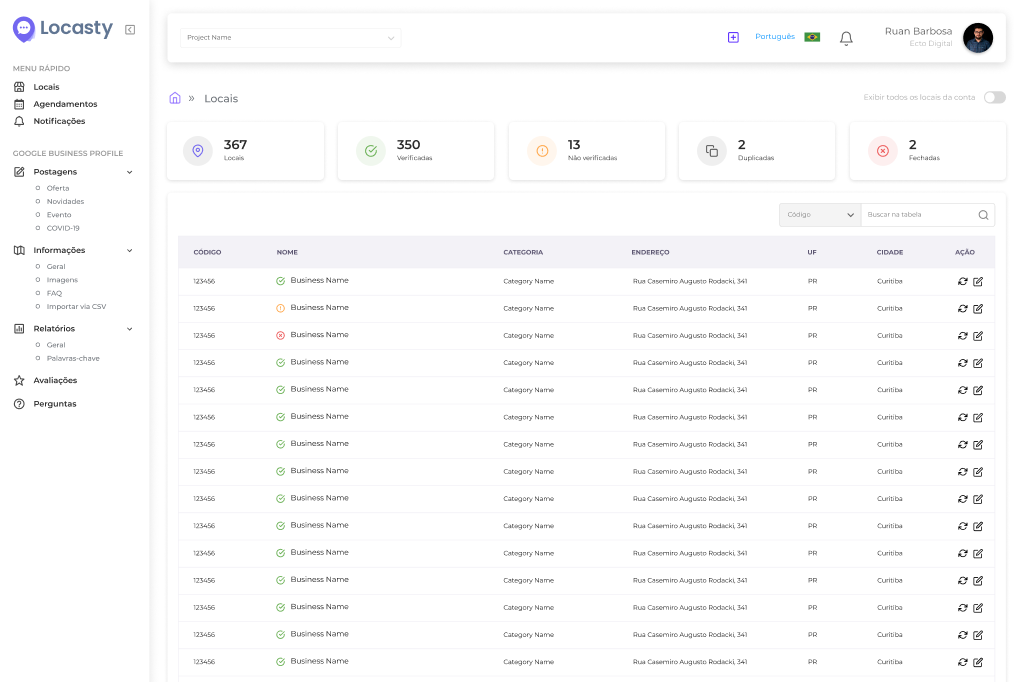
That's where a platform that specializes in local SEO, like Locasty, comes in: it lets you manage hours, photos, and other information for every location from a single dashboard. A change, such as special hours for a holiday, can be applied to many stations at once, without repeating the process profile by profile.
The same goes for reviews: the chain can track comments from different locations in one place and use AI features to detect sentiment and prioritize replies, always with human review.
With the right technology, gas stations and other businesses can build a process that ensures consistency, speed, and control across the entire network.
Also read: Local digital presence: what it is and how to build it for multi-location businesses
Frequently asked questions about local SEO for gas stations
Before we wrap up, here are answers to some common questions about local SEO for gas stations:
1. Do I have to pay for my gas station to show up on Google Maps?
No. Appearing in search results and on the map is free, and it depends on your Google Business Profile being complete and active. There are paid ads, which appear separately from the organic results, but a spot on the map itself isn't something you can buy.
2. Does local SEO work differently for gas stations than for other industries?
No. Ranking factors such as relevance, distance, and reputation apply to every industry. What changes is how much each piece of information weighs: for a gas station, business hours and open or closed status matter more than for a business where the purchase is less urgent, because people looking for fuel usually decide within minutes.
3. How can a gas station chain keep dozens of Business Profiles up to date without losing control?
The best approach is to centralize management in a single dashboard instead of logging into each profile separately. That way, the person or team in charge can update information in bulk, track reviews, and compare performance across locations while staying in control.
If your company still does this manually, schedule a demo and see firsthand how Locasty's features can simplify the day-to-day digital work of chains and franchises.
Also read: Local SEO guide: strategies to make your business stand out
Cover image — Source: Freepik - Magnific.com (2026)



0 comments